
Sequoia National Park was established in 1890 and was the first National Park in the State of California and third overall in the Nation. Yellowstone National Park was the first and the second was the now-decommissioned Mackinac National Park in Michigan. So if you take the fact that Mackinac National Park was decommissioned, then that would make Sequoia National Park the second.
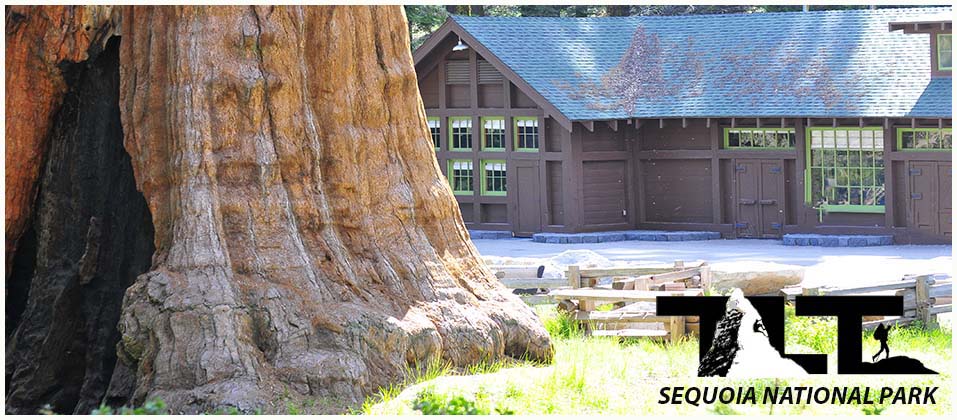
The Giant Forest Museum pictured in the very top image is located in Sequoia National Park, Generals Hwy, Three Rivers, CA 93271. It is a great place to visit and will help you get acquainted with the park. It is open from 9am to 6pm year round and can be reached by calling 559-565-4480. You can get trail information, books, maps, and all sorts of information there. You can also buy tickets to see Crystal Caves there. The park spans 405,051 acres of which 84% is road less wilderness only accessible to those on foot or on horseback.
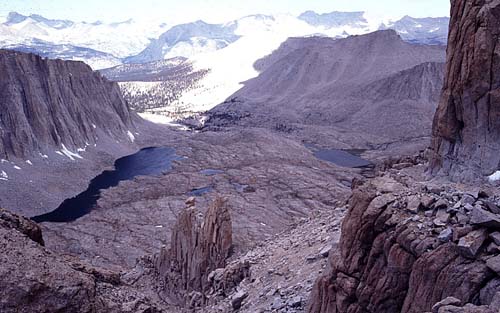 As you may imagine, the park is best known for the largest living thing on earth, the Giant Sequoia. But the park offers so much more. It includes the highest peak in the continental United States which is Mt Whitney soaring to an altitude of 14,505 feet above sea level. In the photo to the left, taken from Trail Crest along the Mt Whitney Trail, you can see Sequoia National Park far below along with its enormas expanse of wilderness as far as the eye can see. Also, within Sequoia are deep canyons, roaring rivers, beautiful lakes, amazing rock structures and caves, and a wonderful variety of wildlife. So the park offers something for just about everyone. And lets not forget neighboring Kings Canyon National Park which sports an eight thousand foot gouge that is deeper than the Grand Canyon. But all this being said, most people come to see the massive Giant Sequoia's, and out of the only 75 remaining Sequoia Groves, fifty are located on the slopes of the Western Sierra Nevada in and around Sequoia National Park.
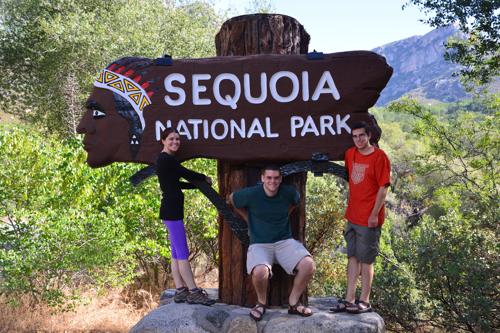 The vast majority of the park is roadless wilderness; in fact, to the surprise of many visitors, no road crosses the Sierra Nevada within the park's boundaries. This leaves over 84% of the park's area as designated wilderness[1], accessible only by foot or by horse. Sequoia's back country offers a vast expanse of high-alpine wonders. Covering the highest-elevation region
of the High Sierra. Two miles north of the Giant Forest Museum, you will find the Giant Forest and Lodgepole Visitor Center (559-565-4436). Just like the Giant Forest Museum, you can get books, maps, and also wilderness permits here. You can also purchase tickets to the Crystal Caves Tour at this location. This center is open from late May through October from 7am to 6pm.
The vast majority of the park is roadless wilderness; in fact, to the surprise of many visitors, no road crosses the Sierra Nevada within the park's boundaries. This leaves over 84% of the park's area as designated wilderness[1], accessible only by foot or by horse. Sequoia's back country offers a vast expanse of high-alpine wonders. Covering the highest-elevation region
of the High Sierra. Two miles north of the Giant Forest Museum, you will find the Giant Forest and Lodgepole Visitor Center (559-565-4436). Just like the Giant Forest Museum, you can get books, maps, and also wilderness permits here. You can also purchase tickets to the Crystal Caves Tour at this location. This center is open from late May through October from 7am to 6pm.
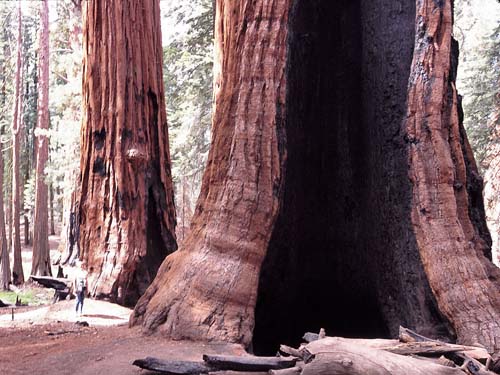 To the left Above
you see a couple of the many trees in the Giant Forest section of Sequoia National Park. The Giant Forest contains five out of ten of the largest trees in the world. The Giant Sequoia is truly one of the living wonders of this world. Reaching heights of over 275 feet, and diameters of over 27 feet, they are the largest living things on earth. If you look carefully you can see the figure of a person on the left side of the photo that will give you a sense of scale and size of these giants. The Sequoia's bark can be up to 24 inches thick, and this makes them very resistant to fire. They can also reach ages of over 3,000 years old making them one of the oldest living things. These massive trees grow at elevations from 4,600-7,000 feet, and only in the Sierra Nevada.
To the left Above
you see a couple of the many trees in the Giant Forest section of Sequoia National Park. The Giant Forest contains five out of ten of the largest trees in the world. The Giant Sequoia is truly one of the living wonders of this world. Reaching heights of over 275 feet, and diameters of over 27 feet, they are the largest living things on earth. If you look carefully you can see the figure of a person on the left side of the photo that will give you a sense of scale and size of these giants. The Sequoia's bark can be up to 24 inches thick, and this makes them very resistant to fire. They can also reach ages of over 3,000 years old making them one of the oldest living things. These massive trees grow at elevations from 4,600-7,000 feet, and only in the Sierra Nevada.
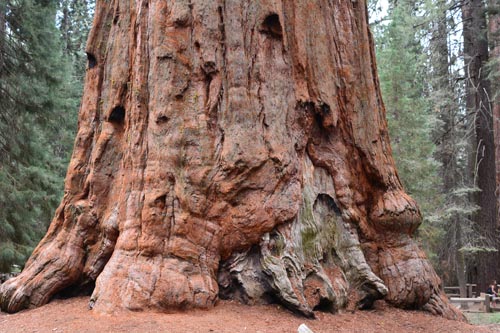 The General Sherman Tree (shown in the photo to the rightabove) along with some of the best short trails in the park are located in this area, and with little effort, you can walk through some of the most stunning groves of Giant Sequoias anywhere to be found. In my book, this location is a must see! You will be hard pressed to find better specimens of these Giants anywhere in the Sierra Nevada, or in the world for that matter. Check out the size of the Sequoia in the image above, and compare it to the people sitting on the bench to the right of the tree. You can certainly get a feel for scale by making the comparison.
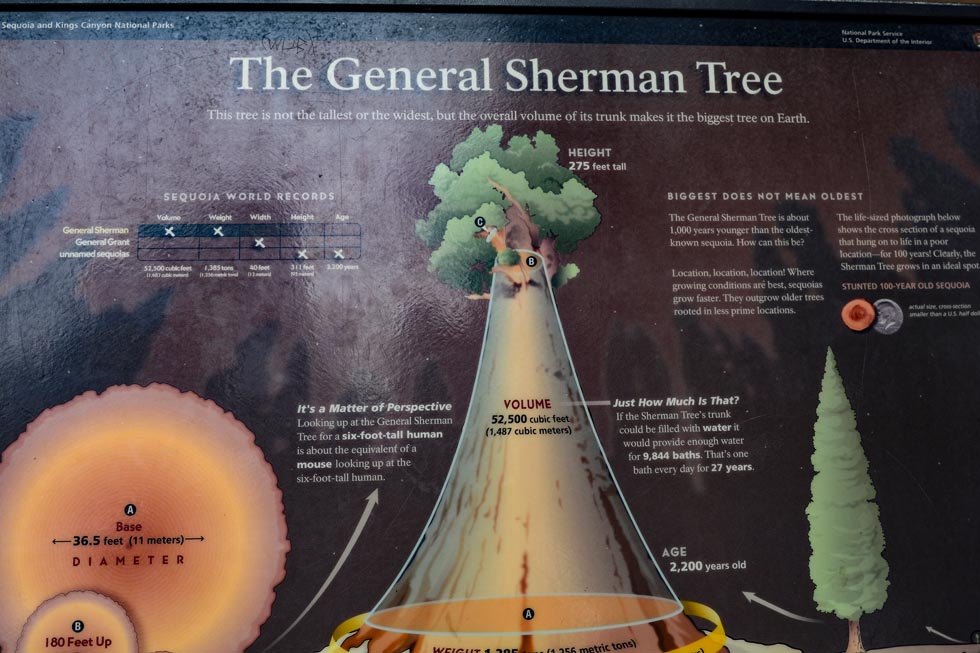 In the image above is one of many informative signs that the National Park provides that tells you all about the immensity of the General Sherman Tree. Hands down, the largest by volume in the world! From the General Tree Parking Lot to the location of the tree, it is about a half mile walk on a nicely paved trail as shown in the map below.
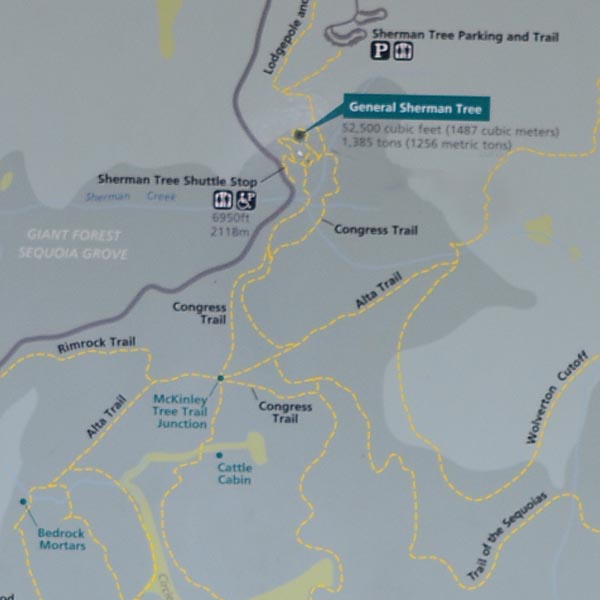 In the map to the leftabove, you can see the trails around the General Sherman Tree, The Congress Trail and many others. I would consider the Giant Forest Trail, the General Sherman Trail, and particularly the Congress Trail must do activities if you want to see the very best of what Sequoia National Park has to offer.
 They are beautifully easy to travel and well kept up trails. These trails are (for the most part) paved and provide access for nearly all visitors (including those requiring wheel chairs, walkers, and other aids for the disabled). This is not to say that Sequoia does not include multitudes of more challenging trails for both ambitious hikers, backpackers, and mountaineers, but these trails, near the Giant Forest Museum and parking lot, are a real treasure and provide incredible prime examples of the mighty Sequoia Trees for which the Park is famous for!
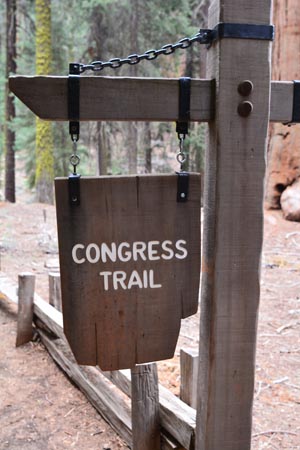 The Congress Trail (as mentioned above) is a super popular was of getting to see the best examples of Sequoia Trees in the world. No other trail in Sequoia has nearly as fine of Sequoia specimens in such a short distance of one another. From the Giant Forest Parking Lot, walk about a half mile to the General Sherman Tree. This section of Trail is the most crowded, and most people turn around at the General Sherman Tree. So sad, because this is where the Congress Trail begins, and in my opinion, the effort of walking the Congress Trail Loop will treat you to some of the most spectacular clusters of Sequoia Trees anywhere to be seen in the entire National Park, or for that matter.....the world. I assure you that you won't be disappointed!
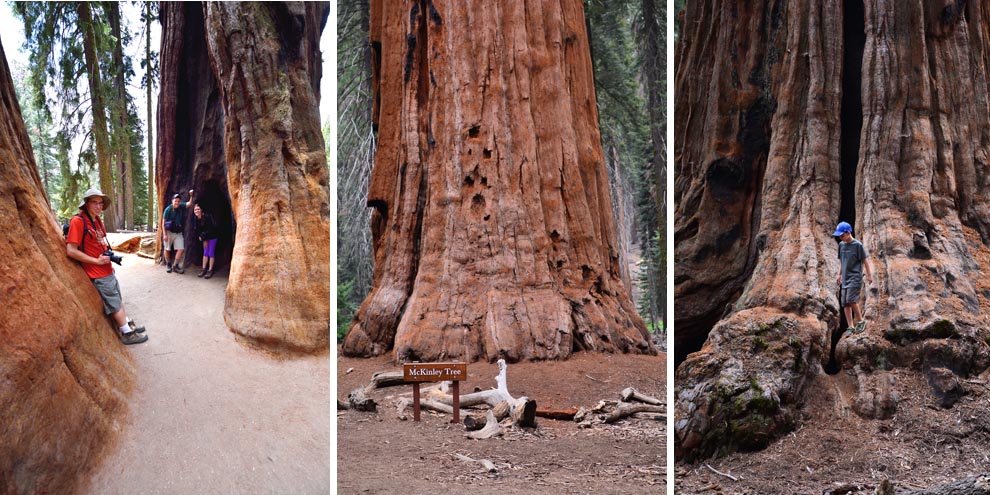
As you continue along the trail, you will come to the intersection of the Alta Trail. Hike on, and after bout a few hundred yards,turn left onto a paved trail. The next half-mile, I believe, is the very best part of the hike. The Park Service has come up with some creative names for these magnificent clusters of Sequoia Trees that go along with the name of the trail. Names like "The House Group" "The Senate" "McKinley Tree" etc.
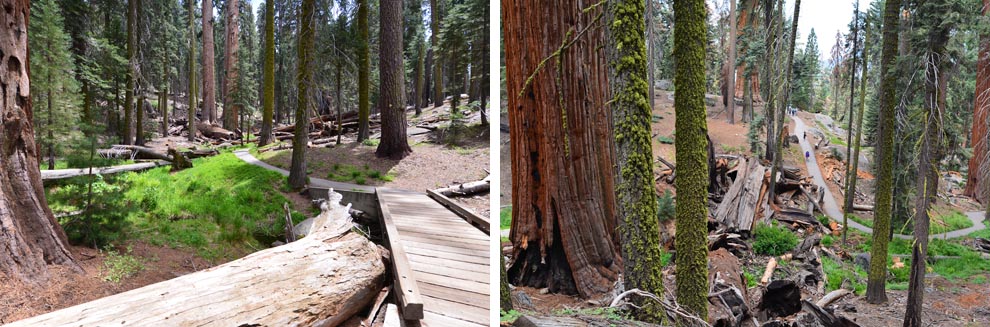
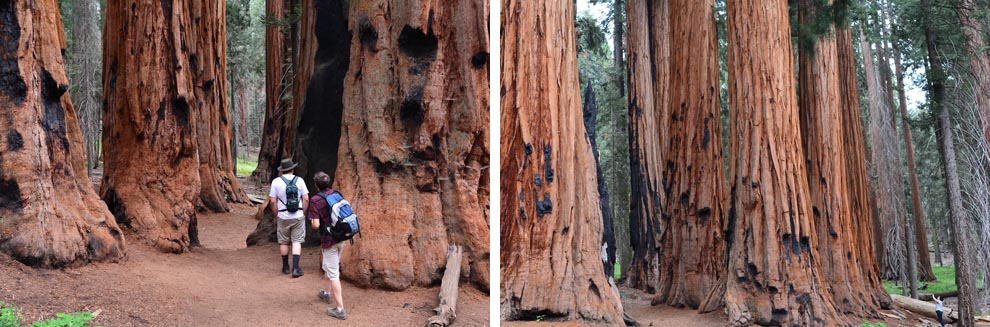
Below are some images taken along the Congress Trail to give you a feel for what it looks like. But no photo can take the place of actually being there.
 Well, that is a very small part of Sequoia National Park. There is so much to see there, and as with all our National Parks here in the United States, it is well worth the visit. I am so thankful that the people that came before us has the foresight to preserve these national treasures!
Dave French,
Timberline Trails
Email Sign Up
| Join the Adventure! Sign up here for Timberline Trails Monthly Newsletter |

Join us on Instagram

©2006-2026 TimberlineTrails. All Rights Reserved.
....